sacrifices


Sacrifices That Remove Pain and Bring Healing

Sacrifices That Remove Pain and Bring Healing

Since the destruction of the Second Temple, the book of Leviticus might appear irrelevant since we can no longer offer the animal sacrifices mentioned in this week’s Torah portion Tzav (Leviticus 6:1-8:16). Some argue that we are better off without this ‘barbaric” ritual, and others claim we are now bereft of a means of atoning for our sins. In a profound statement, the prophet Samuel says, "Does God delight in burnt offerings and sacrifices as much as in obeying the voice of God? Behold, obed


Zalman Kravitz

Zalman Kravitz

Sacrifices, Salt and Spirituality

Sacrifices, Salt and Spirituality

This Shabbat Jews throughout the world Jews read the opening chapters of the book of Leviticus known as the Torah portion of Yayikra. These chapters discuss the commandment to bring both animal and grain sacrifices, for a variety of reasons, of which only one was for unintentional sins. We are also instructed to accompany each offering with salt (Leviticus 2:13). At the same time, the Torah commands us to avoid cruelty to animals. In Genesis 9:4, we are forbidden from eating flesh torn from a


Zalman Kravitz

Zalman Kravitz

Purim, Sacrifices and Salvation

Purim, Sacrifices and Salvation

I remember an encounter with a missionary who tried to share the gospel with me.  It was 1972, and I was a student at the University of Texas in Austin.  One of my friends turned out to be an evangelical Christian. I discovered this when he told me, “there is no forgiveness of sin without the shedding of blood, and since there is no longer a Temple to offer sacrifices I would need to accept Jesus to be saved.” I grew up in a traditional kosher Jewish home and attended a modern orthodox synagog


Zalman Kravitz

Zalman Kravitz

Demystifying the Paradox of Animal Sacrifices

Demystifying the Paradox of Animal Sacrifices

Demystifying the Paradox of Animal Sacrifices I often recall the stories my father and grandfather told me about fighting in the World Wars. Their experiences taught me that “sacrifice” means the willingness to put your life on the line to help others. To this day, I adhere to this belief and salute their bravery. However, when I discuss the Bible, the word “sacrifice” has a different connotation, one I never thought about when I was young. I knew Judaism rejected human sacrifices. That was s


Zalman Kravitz

Zalman Kravitz

Passover, Deprogramming, and a Deli Sandwich

Passover, Deprogramming, and a Deli Sandwich

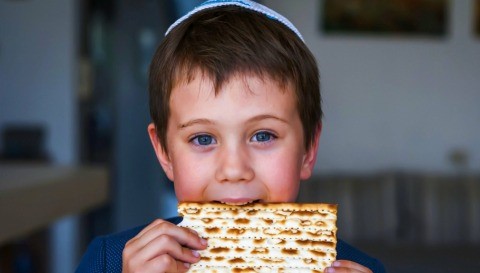
Passover, Deprogramming, and a Deli Sandwich Growing up in New York our family looked forward to celebrating Passover.  I fondly recall my mother preparing matzah with butter for my lunch and my non-Jewish friends asking me to share it with them. At our Passover seder, we ate matzah to recall the bread of affliction and ate bitter herbs [maror] to remind us of the bitterness of slavery. In the time of the Temple, Jews were also required to partake of the roasted paschal lamb.  In fulfillment


Zalman Kravitz

Zalman Kravitz