Passover, Deprogramming, and a Deli Sandwich
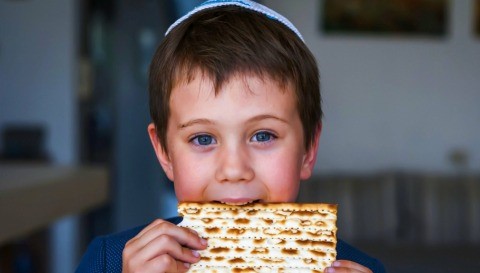
Growing up in New York our family looked forward to celebrating Passover. I fondly recall my mother preparing matzah with butter for my lunch and my non-Jewish friends asking me to share it with them.
At our Passover seder, we ate matzah to recall the bread of affliction and ate bitter herbs [maror] to remind us of the bitterness of slavery.
In the time of the Temple, Jews were also required to partake of the roasted paschal lamb. In fulfillment of Exodus 12:8, the sage, Hillel, would combine matzah, maror, and roasted meat and eat them together. At my family seder, I would jokingly tell my guests that this was the “first deli sandwich.”
Since the destruction of the Temple, we no longer include the Passover sacrifice in our celebration. Nevertheless, the underlying spiritual message of this sacrifice lives on to inspire us and connect us to God.
Ancient Egypt was a civilization renowned for its military might and famous for its monuments, including the great pyramids. Egyptian temples were built for the official worship of their gods. Idolatry was rampant among the Egyptians, who worshiped many animals as manifestations of their gods. Sheep were also worshiped, an idolatrous practice witnessed by the Jews.
To achieve true spiritual freedom the Jews had to eradicate any attraction to idolatry. The procedure of offering the paschal lamb was a voluntary “deprogramming” to prepare the Jews for the Exodus and the receiving of the Torah.
This “deprogramming” is alluded to in the Torah verse that commands the taking of the Passover lamb. The verse says, “Draw [משכו] out and take [וקחו] for yourselves a lamb” (Exodus 12:21). Our sages point out that it would have been sufficient to say, “take a lamb.” By adding the word “draw,” the Torah is instructing us to “withdraw yourself” from any association with idolatry.
Withdrawing from idolatry does not happen overnight. It can take time to confront your temptations and disassociate from idolatry. The regulations associated with bringing the paschal lamb are steps in the deprogramming process.
The prescribed four-day period between taking the lamb into your home and slaughtering it provided an opportunity to contemplate that this so-called god lacked the power to free itself. As King David said, “They have a mouth but do not speak, eyes but do not see, ears but do not hear” (Psalm 115:4-8).
After the lamb was slaughtered, it had to be roasted whole. This procedure accomplished several things. Once again, the Jews witnessed that idols had no power to save themselves. Secondly, by roasting the lamb whole, no one could deny that a lamb had been slaughtered. Finally, by roasting the meat, the aroma traveled outdoors, and the Egyptians were made aware that their “god” had been destroyed.
These steps, as well as placing the lamb’s blood on the outside of their doors, publicly demonstrated the courage of the Jewish people to reject idolatry.
This week’s Torah portion Tzav (Leviticus 6:1–8:36), coincides with the Shabbat before Passover, known as Shabbos Hagadol – The Great Shabbos. One explanation for the name is to commemorate the Jewish peoples’ great act of denying idolatry, something we must do in every generation.
Furthermore, this week’s special prophetic Haftorah reading contains the word “great” in reference to God’s promise to “send Eliyahu the prophet before the great and awesome day of God” (Malachi 3:23-24).
This event will herald the promised messianic redemption, which is so central to our faith we recall it by pouring the cup of Eliyahu during our Passover seder.
May this Great Shabbos bring abundant blessings, and may we see the ultimate redemption, when idolatry and evil fade from existence, and peace and the knowledge of God fill the earth.
Shabbat Shalom and Happy Passover,
Rabbi Bentzion Kravitz
© 2021 Jews for Judaism • P.O. Box 351235, Los Angeles, CA 90035 • 310-556-3344
info@JewsforJudaism.org • www.JewsForJudaism.org • www.SMARTalks.com


.jpg)