How To Ensure A Meaningful Legacy
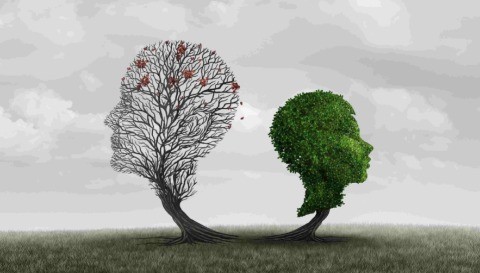
Aging is associated with changes in physiology, wisdom, and spiritual growth. As we age, we also think about our mortality and the legacy we will leave behind.
In this week’s Torah portion Chayei Sarah (Genesis 23:1–25:18), Avraham has aged, and he realizes it is time to ensure his legacy. He entrusts Eliezer, the most faithful member of his household, to find an upstanding bride for his son Yitzchak.
The Torah recounts how Eliezer meets Rivkah and witnesses that she possesses the qualities of kindness and righteousness. These two attributes exemplified Avraham’s life and he wanted his son to follow in his path. To accomplish this, Avraham understood that Yitzchak needed to marry someone who shared these values. This is what King Solomon meant when he said, “He who finds a wife finds what is good” (Proverbs 18:22).
In the story of Eliezer’s encounter with Rivkah two Hebrew words, betulah and almah, are used to describe her. This is also the first time these words appear in the Torah.
In Genesis 24:16, when Eliezer first sees Rivkah she is described as “a virgin (betulah - בתולה) whom no man has known.” Later in verse 43, when Eliezer relates his encounter with Rivkah to her father and brother, he refers to her as a “young woman” (almah - עלמה).
Missionaries incorrectly claim that these two verses prove that the words almah and betulah both mean a virgin. They make this claim in a desperate attempt to validate their argument that Isaiah 7:14, which uses the word almah, is a prophecy that predicts that the messiah will be born of a virgin. Scholars point out that virgin birth stories were common in pagan religions and adopted by the church to make their new religion more appealing to non-Jews.
Missionaries desperately use the story of Rivkah to prove their claim because they are confronted with the fact that the word almah is consistently translated as “young woman” in Jewish and Christian versions of the Bible. However, Christian bibles are inconsistent when it comes to Isaiah 7:14, where they blatantly mistranslate almah as “virgin.” It is noteworthy that some Christian bibles like the New Revised Standard Version, agree that in Isaiah 7:14, almah should be translated as a young woman.
In context, Isaiah is speaking about the birth of a child to a young woman who is already pregnant. Isaiah tells Jerusalem’s King Achaz that in the same way the child’s birth is imminent, so too will be the downfall of two enemies who are threatening to attack him. The prophecy is fulfilled in the next chapter of Isaiah and historically occurred more than 500 years before the birth of Jesus.
So why does Genesis 24 use two different words to describe Rivkah? The answer is simple, and it has to do with perspective.
In Genesis 24:16, the word betulah clearly means a virgin because it is defined as someone “whom no man has known.” However, in this instance, Avraham’s servant Eliezer, who could not know intimate information about Rivkah, is not speaking. The Torah is narrating this information from God’s perspective. Later in verse 43, when Eliezer uses the word “almah” to describe Rivkah as a “young woman,” he describes something he could know.
The lesson for us is to study the Torah carefully and not jump to conclusions. This is our Jewish legacy, as our sages teach, “Turn it over, turn it over because everything is in it” (Ethics of our Fathers 5:21).
Shabbat Shalom,
Rabbi Bentzion Kravitz
© 2020 Jews for Judaism



.jpg)