How Could Man Be Created in God’s Image?

How Could Man Be Created in God’s Image?


Share this post

This week we completed the annual cycle of reading the Torah and started again with the Torah portion of Bereishis (Genesis 1:1–6:8).

The word Torah means more than “the law” or “bible.” The root of the word Torah is “horah” which means “instruction.” As it says, “instruct (horos) the children of Israel” (Leviticus 10:11).

The Torah is a source of transformative instructions which affect our body and soul.

In this week’s Torah portion, there is a valuable spiritual lesson derived from two words used to describe the creation of man. The verse reads, “Let us (plural)make man in our (plural) image”(Genesis 1:26).

Missionaries error in thinking that the plural words “us” and “our” teach that God is a duality.

However, the Torah teaches that “there is nothing else” (Deuteronomy 4:35) besides God. God also transcends the limitations of time and space, as it says, “I am the first, and I am the last; besides me, there is no God” (Isaiah 44:6). Therefore, Genesis 1:27 “God created man in his (singular) image” uses the singular to describe the creation of man.

These verses reaffirm the unity of God and disprove the missionary claim.

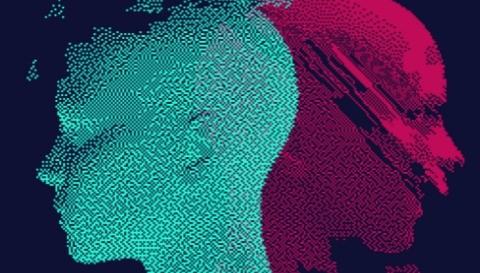
The use of the plural in verse 26 teaches that God created man with both a physical body and a spiritual soul.

The first man was named Adam, derived from the Hebrew word “adamah” which means earth. Adam’s name indicates the physical aspect of mankind.  As it says, “God formed man of dust from the ground (adamah) (Genesis 2:7). The second part of the verse, “and God breathed into his nostrils the soul (neshmas) of life indicates the spiritual aspect of a person.

This idea is repeated by King Solomon when he says that upon the death of a person, "the dust will return to the earth, and the spirit will return to G-d who gave it." Ecclesiastes 12:7.

The dual nature of mankind teaches that we have the potential and responsibility to sanctify the material world, with the unlimited power of our spiritual soul to direct our physical body to fulfill the Torah and commandments.

May this Shabbos launch us into a new cycle of joining the spiritual and physical in the service of the Almighty.

Shabbat Shalom,

Rabbi Bentzion Kravitz

Share this post

Written by

Be the first to know

Join our community and get notified about upcoming stories

Subscribing...
You've been subscribed!
Something went wrong
I Turned Down A Ticket To Heaven

I Turned Down A Ticket To Heaven

I Turned Down A Ticket To Heaven While attending college, a fellow student offered me a ticket to heaven. All I had to do was “believe in Jesus,” and if not, I would go to hell. I turned down his offer and explained that Judaism requires that we believe in God and follow the commandments. King Solomon affirms this principle when he says the bottom line of Judaism is to “Be in awe of God and keep His commandments for that is the whole person” (Ecclesiastes 12:13). Despite Solomon’s powerful wo


Zalman Kravitz

Zalman Kravitz

What Skeptics and Believers Can Learn From Noah

What Skeptics and Believers Can Learn From Noah

What Skeptics and Believers Can Learn From Noah Most people are familiar with the Torah’s story of Noah and the Ark. Whether skeptic or believer, it is interesting to know that many cultures have flood stories. One account inscribed in Sumerian on clay tablets dates to the late third millennium — B.C.E. Dozens of movies portray the story of Noah’s Ark, and some explorers claim they have discovered the ark’s remains in present-day Turkey. There is even a $100 million Christian theme park in K


Zalman Kravitz

Zalman Kravitz

The War of Armageddon Is Not The Apocalypse

The War of Armageddon Is Not The Apocalypse

Sukkot and Simchat Torah The War of Armageddon Is Not The Apocalypse The Jewish High Holidays, known as the Days of Awe, constitute a spiritual progression. On Rosh Hashanah, we coronate God as our King, on Yom Kippur, we receive God’s forgiveness; and on Sukkot [the Festival of Booths], we rise to another level. Sukkot is a time to demonstrate our trust in God by moving from the safety of our homes to the temporary and less-secure dwelling known as the sukkah. In this tiny hut with its ro


Zalman Kravitz

Zalman Kravitz

Yom Kippur Should Be Uplifting, Not Boring

Yom Kippur Should Be Uplifting, Not Boring

Yom Kippur Should Be Uplifting, Not Boring When I was growing up, my family attended synagogue and fasted on Yom Kippur. Although the day was holy, the all-day service was tedious and I did not feel spiritual. As my relationship with God and Judaism grew, Yom Kippur became more spiritual and significant to me. I finally understood why it is the holiest day of the year. We start our preparation for Yom Kippur ten days earlier, on Rosh Hashanah. On this day we proclaim, Avinu Malkeinu, God is o


Zalman Kravitz

Zalman Kravitz