
You cannot teach a man anything, you can only help him to find it within himself." - Galileo
Jewish tradition teaches that we were created as sparks of God, "in the image of God," body and soul. God put his image on earth, in the form of human beings. One way to identify with the concept of the “image of God” is through a simple metaphor. Let us find out more about the ego and the soul in this post.
Visualize a movie projector and a screen. When turned on, the light projects brightly onto the screen. Consider that God is the projector, or the “source” of the light, the soul is the light illuminating the screen, and the screen itself is the face of man. Thus we have a glimpse at the way the a godly soul is bestowed in man. With that soul came a mission.
"Be creators, like me!" He said. "I'm putting you in charge of the lower world. Your mission is to help finish the creation and bring it to perfection."
Note that human beings were supposed to help finish the creation. We are supposed to be creators, but not by ourselves. God wants us to be partners with Him in creation. That's why He made sure we would always have a connection to Him, through the soul.
We said, "Great! Sounds like a wonderful project!" But then we walked away, very excited. "Hey, we're creators! We're on our own!" Before you knew it, we forgot whose mission we were on. We forgot the whole point of the project: to create a world filled with divine light.
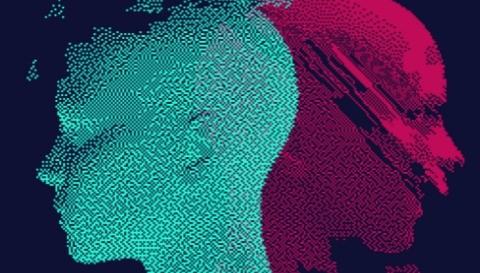
To use a term from modern psychology, we would say that the "ego" took charge.
God created us with an ego, because we had to be able to think independently. "Ego" as we're using the term means our basic human personality, including all the physical and psychological parts and functions that make it work. For each one of us to be able to fulfill the purpose in creation, we had to be able to use our own hearts and minds to understand the world and perfect it. otherwise, we would have simply been robots doing what God thought of already. Ego is the structure of human personality wherein we can identify the exercise of free will.18
But that very structure of the psyche that enables us to be independent also enables us to block infusions from God. God may send us messages about how best to handle this business of perfecting the world. He is probably sending us angels, and dreams, and intuitions all the time, but we have the capacity to shut them out. It's as if there is a "soul channel" that's broadcasting continuously, but we can flick a switch and turn onto a different one whenever we want. As Rabbi Nachman of Breslov said, "We are surrounded by stars, planets, worlds of light, but we can shut it all out with one small hand."
The ability to turn off the soul channel is called free will. There's also a tendency to want to turn off the soul, to shut out God. This tendency or inclination is called by many names in Judaism. The most common is the yetzer hara ("evil inclination"). This is also part of human nature.
A famous story that helps us understand the struggle between what the world's religious traditions have called "good" and "evil":
Once a rabbi pleaded with God to show him heaven and hell. God agreed, and transported the rabbi to a door that bore no name. He trembled as he saw it open before him, into a room where all was prepared for a feast. There was a table, and at its center a great dish of steaming food. The smell and the aroma inflamed the appetite.
Diners sat around the table with great spoons in their hands, yet they were shrieking with hunger in that terrible place. They tried to feed themselves, and gave up, cursing God. For the spoons God had provided were so long that they could not reach their faces and get the food to their tongues. So they starved because of these spoons, while the dish of plenty lay amongst them. The rabbi knew their shriekings were the cries of hell, and as knowledge came, the door closed before him.
He shut his eyes in prayer, and begged God to take him away from that terrible place. When he opened them again, he despaired, for the same door stood before him, the door that bore no name. Again it opened, and it gave onto the same room. Nothing had changed, and he was about to cry in horror. There was the table, and at its center the steaming bowl, and around it the same people, and in their hands the same spoons.
Yet the shrieking had gone, and the cries and the curses had changed to blessings. And nothing had changed, yet everything. For with the same long spoons they reached to each other's faces, and fed each other's mouths. And they gave thanks to God. And, as the rabbi heard the blessings, the door closed. He bent down, and he too blessed God, who had shown him the nature of heaven and hell, and the chasm-a hairsbreadth wide-that divides them.19
The ego has free choice. The ego doesn't have to shut out the soul, but it has a strong tendency to want to. There's a built-in conflict. The soul is within and around us, God's ambassador in our very being. The soul wants to enlighten and enliven our every act, but we want to turn off the switch. Because we can be independent, we think we should be independent. It's like what we often say today about the experts who split the atom and made the first nuclear bomb: they found out they could do it, so they decided they should do it. But was it a careful moral decision? Was it the arrogance of knowledge? Was it simply, perhaps, the ordinary confusion of the mind that just goes ahead under its own steam?
We have great ideas. We want to decide how the world should come out. We think we know how things should go. We are convinced that we know.
This is what Adam and Eve got when they ate from the Tree of Knowledge in the Garden of Eden. They got "knowledge." They could have had life--that is, the kind of Life that is soul-full and filled with divine delight, but they chose knowledge because they were deceived into thinking that complete knowledge would make them Godlike. As a result, knowledge and intellect became our primary means of connecting to the world and, because intellect tends to separate and classify, division was emphasized. Multiple manifestations emerged where there was only unity before, and from then on people had individual ego-consciousness.
It is good that we can solve problems and enjoy life through our own creations. We can create amazing technologies. We can create great art, to make people cry, laugh, think deeply. We can cure disease and remove pain. But when we find that our creations have gone awry like a Frankenstein, when they cause anguish to ourselves or others, we are in big trouble. As you continue to examine the material on this website, consider ways in which you can balance your quest for knowledge with a concomitant pursuit of “ego-free” spirituality.

.jpg)